Aesthetic Clinic
Wraps up in 15 Minutes
User-Generated Content for Aesthetic Clinics: How to Build Trust and Attract More Patients

Published On June 18, 2026
Wraps up in 15 Minutes
Published On June 18, 2026

A patient does not fully trust a clinic just because the clinic says it is safe, skilled and results-driven. They trust what other patients say, what they see in real experiences, and whether the clinic feels transparent before they book.
That is where user-generated content, or UGC, becomes powerful for aesthetic clinics. Reviews, tagged posts, patient testimonials, before-and-after stories, short video reactions and treatment journey content can make your clinic feel more real than any polished brand post.
We have seen this with aesthetic clinics that already had strong services but weak social proof. Once patient voices, review content and real treatment journeys became part of the marketing system, the brand felt more believable and the consultation path became easier.
The goal is not to pressure patients into posting. The goal is to build a simple, ethical and consent-led system that helps happy patients share their experience in a way that protects privacy, supports compliance and attracts better-fit patients.
User-generated content matters because aesthetic patients are cautious. They are not only buying a treatment. They are trusting someone with their face, skin, hair, body and confidence. Real patient content helps reduce that trust gap before the first consultation.
BrightLocal’s 2026 Local Consumer Review Survey found that 97% of consumers read reviews for local businesses, and 74% only care about reviews written in the last three months. For aesthetic clinics, this means fresh patient proof is not optional. It is part of the decision journey.
UGC also makes your clinic easier to understand. A polished treatment page can explain what microneedling, laser hair removal or fillers do. But a patient story shows what the experience felt like, what questions came up, and why someone finally decided to book.
Strong UGC answers the questions patients often keep private: Will I be judged? Will the result look natural? Is the clinic clean? Do people like me come here? Will someone explain things clearly?
UGC is any content created by patients, clients, followers or community members instead of the clinic’s marketing team. For aesthetic clinics, the most useful formats are reviews, testimonials, tagged posts, story mentions, treatment journey videos, Q&A comments and consent-approved before-and-after content.
The best UGC is not always the most polished. A short review about how comfortable someone felt during consultation can be more valuable than a perfect studio video. Patients want signs that the clinic experience is safe, personal and real.
A good UGC system usually includes these content types:
This is why UGC should be planned as part of your clinic’s broader content marketing system, not treated as random reposting whenever someone tags the clinic online.
| UGC Type | Best Use | Trust Value | Risk to Control |
|---|---|---|---|
| Google reviews | Local search, website proof, consultation pages | Shows recent patient confidence | Generic or unanswered reviews weaken trust |
| Written testimonials | Treatment pages, emails, brochures | Explains the patient experience in their words | Needs clear consent and balanced wording |
| Tagged social posts | Instagram Stories, Reels, profile highlights | Feels natural and community-led | Do not repost without permission |
| Before-and-after photos | Treatment pages, consultations, social education | Shows realistic result range | Misleading angles or lighting can damage trust |
| Patient journey videos | Reels, YouTube Shorts, landing pages | Builds emotional confidence | Must avoid overpromising results |
| Comment screenshots | FAQs, social proof, content ideas | Shows real patient concerns | Remove names or identifiers when needed |
Start with low-risk formats such as reviews and testimonials, then build toward richer formats such as patient journey videos and before-and-after stories.
Clinics should collect UGC by making the ask simple, optional and respectful. A patient should never feel pressured to share their face, treatment details or private story. The best collection systems focus on timing, wording and consent.
The right moment is usually after a positive milestone. That could be after a follow-up visit, a completed treatment course, a kind message from the patient or a strong review. Asking too early can feel transactional. Asking too late loses emotion and detail.
Google says businesses can read and reply to reviews once their Business Profile is verified, and replies show publicly as the business. This makes review collection and response part of the clinic’s visible trust layer, not a private admin task.
A simple review request might say: “We are so glad you had a positive experience. If you feel comfortable, a short Google review about your visit would help other patients feel more confident before booking.”
For social or video UGC, keep the request even clearer. Explain where the content may appear, how long it may be used, whether their name will be shown, and that they can say no without affecting their care.
Aesthetic clinics should treat consent as the foundation of every UGC activity. Patient content may feel casual on social media, but it can involve sensitive information, treatment details and identifiable images. That creates privacy, ethics and advertising risk.
In the US, HHS explains that the HIPAA Privacy Rule generally requires written authorization before protected health information is used or disclosed for marketing. HHS marketing guidance is a useful reminder that patient stories and photos should never be treated casually.
The FTC also says endorsements on social media need clear disclosure when there is a material connection, such as payment, gifts, discounts or other value. The clinic should review FTC endorsement guidance before using paid creators, incentives or ambassador-style content.
The safe rule is simple: if the content identifies a patient, shows a treatment result, mentions a medical concern, or was created in exchange for something of value, pause and document approval before publishing.
A strong consent workflow should cover:
Clinics should use UGC wherever patients need reassurance before taking the next step. Social media is important, but UGC should also support treatment pages, landing pages, Google Business Profile activity, email follow-up, paid ads and consultation conversations.
On Instagram, UGC can sit in Story Highlights, Reels, carousel proof posts and comment-led educational content. On the website, it can support treatment pages, practitioner bios, before-and-after galleries and booking pages. In email, it can help unsure prospects move from research to consultation.
This matters because UGC can support conversion, not just engagement. Emplifi reported in Q1 2026 that pages featuring UGC saw higher visits and stronger UGC-driven conversions across its benchmark analysis. Aesthetic clinics should apply that idea carefully, with healthcare compliance in mind.
The best placement depends on the patient’s stage:
We usually recommend building a small library first. Ten strong review snippets, five consent-approved patient stories, and a few realistic before-and-after examples can support months of high-trust content.
Before-and-after content can be powerful, but it must be handled with extra care. Aesthetic patients want proof, but they also need realistic expectations. The clinic’s responsibility is to educate, not create pressure or unrealistic comparison.
Use consistent lighting, angle, distance, facial expression and timing. Mention when the after photo was taken and avoid filters, heavy editing or dramatic framing. If the result depends on multiple sessions, skincare habits or maintenance, say so clearly.
A better caption does more than say “amazing result.” It explains the patient concern, the treatment approach, the time frame, and that individual outcomes vary. This makes the content more helpful and more trustworthy.
UGC becomes a patient acquisition asset when it is connected to a clear next step. A review screenshot can build trust, but it should also lead toward a treatment page, consultation form, WhatsApp inquiry, phone call or email follow-up.
Think of every UGC piece as part of a path. A patient sees a tagged Reel, checks the clinic profile, reads reviews, visits the treatment page, sees a testimonial near the CTA and books a consultation. The content works because the path is connected.
This is where many clinics lose results. They collect lovely testimonials but keep them buried in Instagram Stories. Or they post patient content but forget to add a booking link, treatment explanation or follow-up sequence. Trust rises, but appointments do not.
A practical UGC system should include monthly collection, consent review, content tagging, platform formatting, publishing, internal linking and performance tracking.
| Step | What to Do | Why It Matters |
|---|---|---|
| Collect | Ask happy patients for reviews, testimonials or story content at the right moment. | Keeps the clinic’s proof fresh and patient-led. |
| Approve | Get clear permission before using names, images, treatment details or videos. | Protects patient privacy and clinic reputation. |
| Organize | Tag content by treatment, concern, platform, patient stage and consent status. | Makes content easy to reuse without confusion. |
| Publish | Place UGC on social posts, treatment pages, emails, ads and booking pages. | Moves proof closer to the patient decision point. |
| Respond | Reply to reviews and comments with warmth, privacy and professionalism. | Shows future patients that the clinic is attentive. |
| Measure | Track clicks, calls, booked consultations, saves, replies and assisted conversions. | Shows which proof formats lead to real patient interest. |
The biggest UGC mistakes happen when clinics chase authenticity without structure. Real patient content can build trust quickly, but sloppy permission, unclear captions or unrealistic result framing can damage that trust just as fast.
Avoid reposting patient content without asking. Avoid editing photos in ways that make results look stronger than they are. Avoid offering discounts for positive reviews. Avoid using patient stories as proof of guaranteed outcomes. And never let a social media trend override privacy or clinical judgment.
Also avoid making every piece of UGC look like an ad. The power of patient-led content is that it feels real. Over-designing it, adding too many claims, or forcing a sales message onto every post makes it less believable.
Aesthetic clinics should aim for calm confidence: real voices, clear context, privacy-safe captions and a next step that feels natural.
UGC for aesthetic clinics needs more than reposting. It needs patient psychology, healthcare marketing judgment, creative direction, SEO thinking, social media planning, review management and conversion strategy working together.
At Wolfable, our team brings strategists, content writers, designers, SEO specialists, performance marketers, video creators, web developers and AI-focused specialists under one roof. That helps clinics turn real patient proof into a structured growth asset.
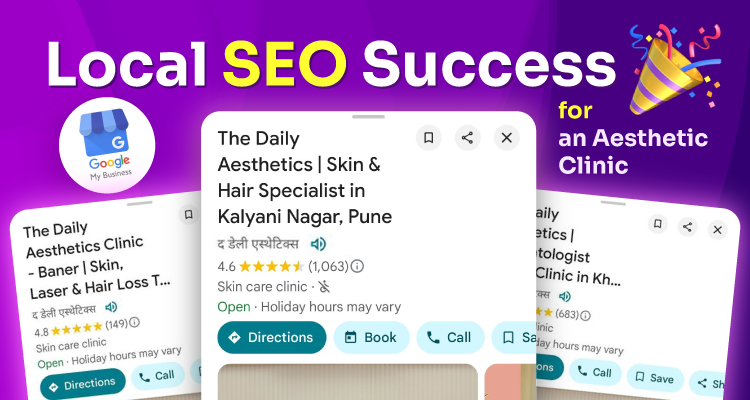
We have seen this work closely with aesthetic and healthcare brands. For one aesthetic clinic we supported, a structured local visibility and reputation strategy helped increase Google Business Profile views by 127%, website clicks by 104%, profile interactions by 83%, and direct calls by 67%. That growth came from making trust signals easier to find, easier to believe, and easier to act on.
That is the real value of UGC for aesthetic clinics. It is not just about collecting more content from patients. It is about turning real patient experiences into a consistent trust-building engine across your website, Google profile, social platforms, ads, and follow-up journey.
User-generated content helps aesthetic clinics turn patient trust into visible proof. It shows real experiences, answers silent concerns and makes the clinic feel safer before a consultation is booked. The key is to use it with consent, care and structure. If your clinic is ready to build a patient-proof system that supports trust, visibility and more qualified bookings, talk to Wolfable and let our team help you shape it properly.