Digital Marketing

Top Marketing Trends That Will Dominate In 2026

Top Marketing Trends That Will Dominate In 2026

You open your laptop. You check your analytics.

The numbers look different than they did two years ago.

Your "Organic Traffic" might be lower. But your revenue is higher. Your sales team isn't making cold calls anymore. Instead, they are answering requests from leads who already know your story, trust your brand, and want your product.

How did this happen?

The panic of "AI replacing humans" is over. We have entered a new phase. In 2026, the digital world is split into two.

On one side, you have the "Noise." This is the infinite flood of generic, AI-generated content. It is cheap, fast, and ignored by everyone.

On the other hand, you have an "Artisan."

This is where the winners live. This is marketing that feels human. It is strategic. It is specific. It cuts through the clutter because it connects with real people.

At Wolfable, we call this "Artisanal Growth."

Whether you run a manufacturing plant in Gujarat or an aesthetic clinic in London, the rules have shifted. You don't need more content. You need better answers. You need a strategy that uses AI to handle the data, so you can focus on the human connection.

The future isn't about fighting technology. It is about mastering it.

Here is exactly how the landscape has changed—and how you can lead the pack in 2026.

Key Takeaways: Your 2026 Growth Blueprint

We analyzed the shift from 2024 to 2026. Here are the 5 critical pillars that will define your success this year:

  • From SEO to "Answer Engine Optimization" (AEO): Stop optimizing just for clicks. Start optimizing for answers. AI search engines now give users the solution directly. Your content must be the "featured answer" to exist.
  • The Rise of the "Artisan" Brand: In a sea of AI bots, "human" is the new premium. Trust is built by showing the real people, the factory floors, and the skilled hands behind your work.
  • Video is the New Search Bar: B2B buyers aren't reading 50-page PDFs anymore. They are searching via short-form video on mobile. If you don't have a video strategy, you are invisible to half your market.
  • Hyper-Niche Advertising: Broad targeting is dead. For sensitive sectors like Aesthetic Clinics, success now comes from "privacy-first" ads that target specific emotional triggers rather than just generic keywords.
  • Contextual Personalization: It’s no longer enough to know a customer's name. You need to know their context. Successful brands use data to predict what a user needs before they even ask for it.

1. What Is Answer Engine Optimization (AEO) and Why Does It Replace SEO?

From "Ten Blue Links" to "One Perfect Answer"

For twenty years, the goal was simple: get to the top of Page 1. But in 2026, Page 1 has disappeared for many queries. It has been replaced by an AI-generated snapshot—a singular answer synthesized from multiple sources.

This is the age of Answer Engine Optimization (AEO).

Users are no longer searching for the "best digital marketing agency." They are asking their devices: "Find me a digital marketing agency in Ahmedabad that specializes in manufacturing and has case studies on increasing export leads."

If your website clearly states that you are a "Manufacturing Digital Marketing Agency" and provides data-backed case studies (like the 55% increase in international leads for Sujal Engineering), the AI will cite you as the answer. If your content is vague, you are invisible.

How Do We Optimize for AEO?

Every day your website sits on page 2 of Google, you are actively handing revenue to your competitors. Consider the mathematics of visibility:

  • Structure is King: Content must be broken down into logical, question-based headers (H2s and H3s) that directly address user intent.
  • Data Density: AI trusts numbers. We use specific metrics—like "840% Organic Traffic Growth" — to signal authority. Vague claims get ignored; hard data gets cited.
  • The "Inverted Pyramid" Style: Start every section with the direct answer, then expand. AI bots prioritize the "bottom line" up front.

Wolfable Strategy: We help our clients transition from "keyword stuffing" to "knowledge structuring." We don't just write blogs; we build knowledge graphs that force AI engines to recognize you as the authority.

2. Why Is "Artisanal" Branding the Only Defense Against AI Fatigue?

The Premium on Human Touch

By 2026, the internet is flooded with AI-generated articles, images, and emails. They are perfect, grammatically correct, and utterly soulless. This has created a "Trust Recession."

In this environment, imperfection is a signal of humanity.

Wolfable’s core philosophy—that we are "skilled artisans" — is more relevant than ever. Clients in complex industries like Manufacturing and Healthcare are wary of automated solutions. They don't want a "set it and forget it" bot manage their reputation; they want a partner who understands the nuance of their business.

How Does "Artisanal Marketing" Work in Practice?

  • Founder-Led Narratives: People trust people. We encourage CEOs to share raw, unpolished insights on LinkedIn, rather than corporate press releases.
  • Bespoke Strategy: We reject templates. Just as a craftsman selects the right wood for a specific furniture piece, we select the right channel mix for every client—whether it’s LinkedIn for a B2B exporter or Local SEO for a clinic.
  • "Show Your Work": We use video to document the process, not just the result. For a manufacturer, this means showing the factory floor. For us, it means showing how we brainstorm a Branding Strategy.

3. How Are Google Ads Evolving for Niche Sectors Like Aesthetic Clinics?

Precision, Privacy, and "Zero-Click" Survival

Running paid ads in 2026 is a high-stakes game, especially for sensitive verticals like Cosmetic & Aesthetic Clinics. The days of bidding broadly on "Botox" or "Lip Fillers" and waiting for the phone to ring are over.

Platforms have tightened privacy regulations, and users have become immune to generic sales pitches. The winning strategy in 2026 is Hyper-Niche Intent Targeting.

The Challenge for Clinics: You are not just competing with other clinics; you are competing with "Zero-Click" searches where Google answers, "How much is Coolsculpting?" directly on the results page. To get the click, you must offer something the AI cannot.

Strategic Nuances (Without Giving Away the "How"):

  • Emotional Mapping: We don't just target keywords; we target the anxiety or desire behind them. An ad for "acne scar removal" requires a completely different tone—empathetic, scientific, reassuring—than an ad for "lip fillers," which might be bold and lifestyle-oriented.
  • Visual Compliance: Google's algorithms are aggressive against "shocking content." We navigate the fine line of showing "Before & After" results that are compelling yet compliant with medical advertising policies.
  • The "Trust Bridge" Landing Page: You cannot send traffic to a homepage. We build dedicated pages that act as a "digital consultation," answering specific questions, showing relevant doctor credentials, and offering a low-friction "Next Step" rather than a hard sale.

This level of detail is why our Performance Marketing team operates on a results-driven model, ensuring your budget is invested, not spent.

4. Why Is Hyper-Personalization Moving Beyond "Hi, [Name]"?

The Shift to Contextual & Predictive Marketing

In 2024, personalization meant inserting a first name in an email subject line. In 2026, it means anticipating a need before the customer even articulates it.

With the integration of AI and big data, we can now map the Customer Journey with frightening accuracy.

Real-World Application: Imagine a procurement manager for an industrial pump company visits your site.

  • The Old Way: They see a generic "Welcome to Sujal Engineering" banner.
  • The 2026 Way: The site recognizes their IP address is from a region with new environmental regulations. It dynamically changes the hero banner to highlight "Eco-Compliant Pump Solutions for the UK Market".

This isn't sci-fi; it's the standard. We use AI Solutions to help businesses move from "broadcasting" to "narrowcasting," delivering the right message to the right person at the exact millisecond of relevance.

5. Is Short-Form Video the New "Google Search" for B2B?

Discovery Happens in the Feed, Not the Bar

It is a myth that B2B buyers don't watch TikTok or YouTube Shorts. In 2026, the "suit" is dead. The modern decision-maker is scrolling on their commute.

Video is no longer just for brand awareness; it is a primary search engine. A potential client is more likely to search YouTube for "how to increase manufacturing efficiency" than to read about a 50-page PDF.

How Wolfable Leverages This:

  • Visual Case Studies: We don't just write about success; we show it. We create video narratives of how we helped a CPA Firm grow traffic by 840%, breaking down the graphs and charts in a visually engaging format.
  • The "Micro-Demo": For our manufacturing clients, we produce 30-second clips of machinery in action. These clips capture the visceral power of the product—something text can never do.
  • AI-Scaled Production: We use AI tools to caption, edit, and resize these videos for every platform, ensuring our clients dominate the feed without a Hollywood budget.

6. Why Is Voice Search Finally a Transactional Channel?

"Hey Google, Find Me a Supplier"

We have talked about voice search for a decade, but 2026 is the year it becomes transactional. With the adoption of smart glasses and advanced in-car assistants, users are now executing complex tasks via voice.

The Shift: Users aren't asking "What is the weather?" They are issuing commands: "Book a consultation with the highest-rated dermatologist near me" or "Call a supplier for industrial magnets in Ahmedabad."

Optimization Tactics:

  • Conversational Long-Tail: We optimize for natural speech patterns. Instead of "Industrial Magnets Ahmedabad," we target "Who is the best manufacturer of industrial magnets in Ahmedabad?"
  • Local SEO Vitality: Voice search is intrinsically tied to location. Our Local SEO services ensure your Google Business Profile is pristine, with accurate hours, services, and reviews, so the voice assistant has "confidence" in recommending you.

7. How Will Community-Led Growth Replace Cold Outreach?

The Return to "Tribes"

As ad costs rise and email open rates fall, the most resilient brands in 2026 are those that own their audience. This is the era of Community-Led Growth.

For a B2B company, this doesn't mean Facebook Group. It means creating a space for value exchange.

  • Educational Hubs: We turn company blogs into "Insights Hubs", packed with expert advice that keeps users coming back not to buy, but to learn.
  • Event Marketing: We leverage offline events and trade fairs—like the "IAMAI Marketing Conclave" —to build real human relationships, then nurture those connections digitally.

It is about moving from "Audiences" (people who hear you) to "Communities" (people who talk to each other about you).

Conclusion: Are You "Wolfable" Enough for 2026?

The trends of 2026 point to a single, undeniable truth: Technology is the vehicle, but humanity is the destination.

You can have the best AI tools in the world, but if they aren't guided by a strategic, empathetic human hand, they are just noise generators. The businesses that will dominate are those that use data to become more personal, more helpful, and more artisanal.

At Wolfable, we have spent years preparing for this shift. We don't just execute tasks; we "nurture" businesses. From our deep roots in Ahmedabad to our expansion into London and the US, we have remained true to our mission: blending creativity and performance to build iconic brands.

We are ready to be your "digital partner on the journey from now to what's next".
Are you ready to stop chasing trends and start setting them?

Frequently Asked Questions (FAQs)

1What is the biggest digital marketing trend for 2026?
The shift to Answer Engine Optimization (AEO) is the biggest trend. Brands must optimize content to provide direct, synthesized answers to AI search engines rather than just aiming for website clicks.
2How can manufacturing companies survive in the 2026 market?
Manufacturers must embrace "Artisanal" storytelling—using video and behind-the-scenes content to show human expertise—while adopting digital tools to reach global buyers, as seen with our client Sujal Engineering.
3Is AI going to replace marketing agencies in 2026?
No. AI will handle data processing and automation, but "Artisanal" strategy—the human insight, creativity, and empathy provided by agencies like Wolfable—will become even more valuable.
4How should clinics run Google Ads in 2026?
Clinics need to move beyond generic keywords to "intent-based" targeting. Campaigns must be privacy-compliant, emotionally resonant, and supported by high-quality video content that builds trust instantly.
5Why is Wolfable called an "Artisanal" agency?
We call ourselves "artisans" because we believe growth is an art form. We reject templates and apply bespoke craftsmanship to every strategy, ensuring each client gets a unique solution.
6Does voice search really matter for B2B businesses?
Yes. As voice assistants become transactional, B2B buyers use them to find local suppliers quickly. Optimizing for questions like "Who is the best pump manufacturer near me?" is critical for capturing these leads.
7What is the benefit of hyper-personalization?
Hyper-personalization increases conversion rates by showing users exactly what they need based on their real-time behavior, rather than a generic message. It turns a cold website visit into a warm, relevant experience.
8How does Wolfable measure marketing success?
We focus on tangible business outcomes, not vanity metrics. We track organic lead growth, international expansion, and return on ad spend (ROAS), ensuring our work drives real revenue.

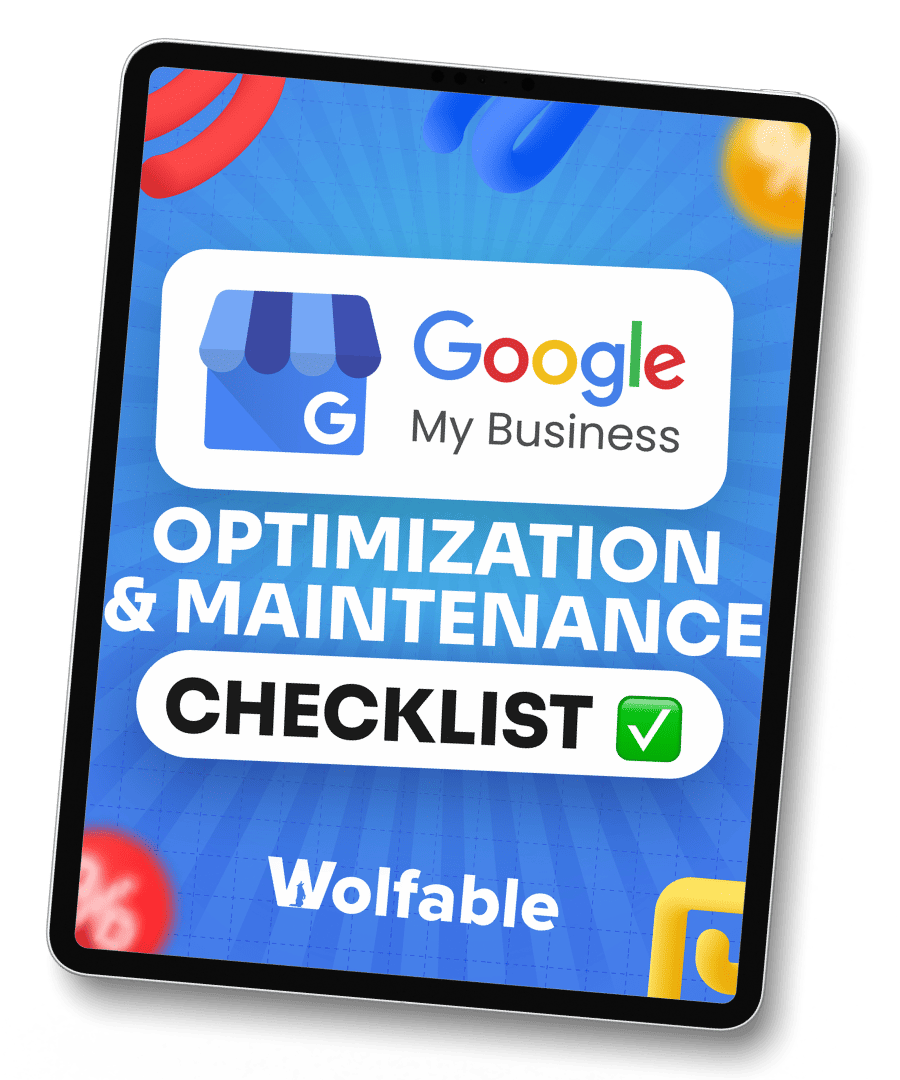
Get Your FREE Copy

Kindly submit the form below to download your checklist.

    Get Your FREE Copy

    Kindly submit the form below to download your checklist.

      Call