Aesthetic Clinic
Wraps up in 7 Minutes
Facebook and Instagram Ad Strategies for Cosmetic Procedures

Published On February 13, 2026
Wraps up in 7 Minutes
Published On February 13, 2026
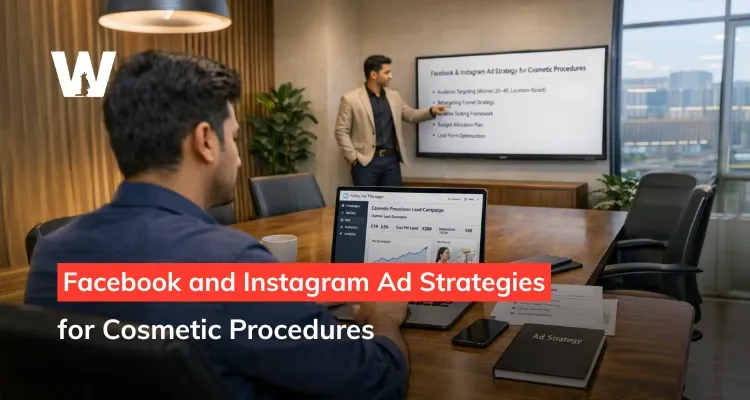
Let’s be honest: selling a t-shirt on social media is easy. Selling a non-surgical rhinoplasty, a hair transplant, or a high-end laser treatment? That is a completely different ball game.
If you are a clinic owner or a marketing head for an aesthetic brand, you already know the struggle. You launch an ad, and it gets rejected for "Personal Health" violations. Or worse, it runs, but you get flooded with leads who ask, "How much?" and then ghost you.
The problem usually isn’t the platform. Meta (Facebook and Instagram) remains the single most powerful tool for visual industries like aesthetics. The problem is often the strategy.
In the cosmetic industry, trust is the currency. People don’t just buy a procedure; they buy the promise of confidence and the security of knowing they are in safe hands. Your ad strategy needs to bridge the gap between a casual scroll on Instagram and a high-ticket consultation in your clinic.
At Wolfable, we have navigated these waters for clients ranging from hair transplant centres to premium skincare clinics. We know that effective advertising isn't just about "boosting" a post; it’s about engineering a journey.
In this comprehensive guide, we are going to break down the strategic frameworks that turn passive scrollers into loyal patients—without getting your ad account banned.
Why do we obsess over Facebook and Instagram for cosmetic procedures? Why not just stick to Google Search?
Google is for demand capture—when someone is already searching for "Botox near me." That is critical, and we handle that with our SEO and Performance Marketing services. But social media is for demand generation.
Social media allows you to reach people who have been thinking about a procedure for years but haven't pulled the trigger. It allows you to interrupt their day with a visual transformation that resonates with their internal desires.
The Visual Advantage:
Cosmetic procedures are inherently visual. Instagram is a visual-first platform. It is a match made in heaven. You can showcase the elegance of your clinic, the professionalism of your staff, and the radiance of your happy patients.
The Demographic Precision:
Meta’s algorithm is terrifyingly good at knowing who is interested in beauty, wellness, and self-improvement. But more importantly, we can layer targeting to find people who have the financial capacity for elective procedures.
Before we talk about creative ideas, we must address the elephant in the room: Ad Rejections.
Meta’s advertising policies are notoriously strict regarding "Personal Health." They explicitly forbid ads that imply a user has a specific medical condition or negative body image. This is where most DIY clinic marketers fail. They post a zoomed-in photo of acne with the caption, "Do you hate your skin?"
Result? Ad rejected. Account flagged.
The solution isn't to trick the system; it's to elevate your marketing. Instead of focusing on the "problem" (the pain point), focus on the "solution" (the feeling).
This nuance is subtle but vital. It requires a shift in copywriting and visual selection. It forces you to be a better brand. High-end aesthetic brands don't shame their customers; they empower them. Your ads should do the same.
If you try to sell a $5,000 surgery to a cold audience with a single image ad, you will burn money. The decision cycle for cosmetic procedures can range from two weeks to two years.
You need a strategy that respects this timeline. At Wolfable, we structure this using a three-tiered funnel.
Goal: Stop the scroll and build trust.
At this stage, people don't know you. They might not even know they want a specific treatment yet. Your goal here is to provide immense value without asking for anything in return.
Strategic Ad Formats:
Goal: Prove you are the best choice.
Now that they know who you are, they are comparing you to the clinic down the street. This is where you deploy your strongest weapon: Social Proof.
Strategic Ad Formats:
Goal: Get the booking.
This is the only layer where we push for the sale. These ads are shown only to people who engaged with the previous two layers (watched the videos, visited your website).
Strategic Ad Formats:
In the world of aesthetics, your creative is your targeting. If your ad looks cheap, viewers will assume your services are cheap. And nobody wants "cheap" plastic surgery.
There is a fascinating dichotomy in ad strategy right now.
Strategic Insight:
We often test both. We might run a sleek, Branded Video to establish prestige, and then retarget those viewers with a raw, authentic selfie-style video from a happy patient.
Many people browse Instagram at work or in public with the sound off. If your video features a doctor talking, you must use captions. Not just auto-generated subtitles, but dynamic, engaging text overlays that highlight the key value points.
You don't want leads; you want patients. There is a big difference. A lead is an email address; a patient is revenue.
To ensure we aren't filling your CRM with "window shoppers," we need sophisticated targeting strategies.
Cosmetic procedures are local. Most people won't drive more than 45 minutes for a laser treatment, though they might fly for a renowned surgeon.
While Meta has removed some income targeting options, we can still target behaviours associated with affluence.
This is where having a good patient database comes in.
Where should you send the traffic?
Option A: Instant Forms (On-Facebook)
Option B: Custom Landing Pages
Many clinic owners make the mistake of just hitting "Boost Post." Here is why that limits you.
| Feature | "Boost Post" Button | Ads Manager Campaign |
|---|---|---|
| Primary Goal | Likes, Comments, Views | Leads, Bookings, Website Traffic |
| Targeting | Basic (Age, Gender, Location) | Advanced (Lookalikes, Custom Lists, Behaviours) |
| Creative Control | Single Image/Video from Feed | Carousels, Dynamic Creative, Dark Posts |
| Retargeting | Very Limited | Full Funnel Retargeting Strategy |
| Placement | Main Feeds Only | Feeds, Stories, Reels, Audience Network |
| Suitability | Brand Awareness | Patient Acquisition & ROI |
You can have the best ad strategy in the world, but if you don't answer the phone, it fails.
Speed to lead is critical. In the cosmetic industry, if you don't contact a lead within 15 minutes, your chances of conversion drop by over 400%.
We often integrate AI & Automation Solutions for our clients. Imagine a system where:
This isn't just technology; it's hospitality. And in aesthetics, hospitality wins.
As search behaviour shifts to voice (Siri, Alexa) and AI (ChatGPT, Perplexity), the way people ask about cosmetic procedures is changing. They aren't just typing keywords; they are asking questions.
Common AI/Voice Queries to Optimize For:
The Strategy:
Your ad copy and your landing page content must answer these questions directly. We use a "FAQ style" approach in ad captions and landing pages. This signals to the algorithms that your content provides the answers users are looking for, increasing the relevancy score of your ads and lowering your costs.
Navigating the regulations, the creative demands, and the technical setup of cosmetic advertising is a full-time job. You are busy running a clinic, managing staff, and treating patients. You shouldn't have to be a media buyer too.
At Wolfable, we specialize in the unique challenges of the aesthetic and medical industry. We understand the nuances of compliance. We know how to showcase "After" results without triggering flags. We know how to build a funnel that respects the patient's journey.
Whether you need a complete Branding Strategy revamp to position yourself as a luxury provider, or a tactical Performance Marketing campaign to fill your appointment book next month, we have the playbook.
Ready to stop wasting budget on "Boost Posts" and start building a predictable patient pipeline?
The cosmetic industry is crowded. To stand out, you don't need to shout louder; you need to speak smarter.
Your potential patients are out there. They are scrolling through their feeds right now, looking for a sign that it’s time to do something for themselves. They are looking for a clinic they can trust.
With the right Facebook and Instagram strategies—rooted in psychology, compliance, and data—you can be that clinic.
Don't let ad rejections or poor lead quality hold your practice back. It’s time to treat your marketing with the same precision you treat your patients.
Would you like to build an iconic aesthetic brand?
Here are the answers to the questions you are likely asking yourself (or Siri) right now.