Aesthetic Clinic
Wraps up in 14 Minutes
How Aesthetic Clinics Can Get More Patients Using GEO

Published On December 3, 2025
Wraps up in 14 Minutes
Published On December 3, 2025
Imagine this scenario: A potential patient in your city picks up their phone. Instead of opening Google and typing "best lip filler clinic," they open ChatGPT or Perplexity and ask:
I’m looking for a safe, high-rated clinic for lip fillers in [City] that specializes in natural results. Who do you recommend and what does it cost?
In less than a second, the AI gives them a single, direct answer. It recommends one or two clinics, summarizes their reviews, mentions their key doctor, and even gives a price range.
If your clinic isn’t mentioned in that answer, you didn’t just lose a click—you ceased to exist for that patient.
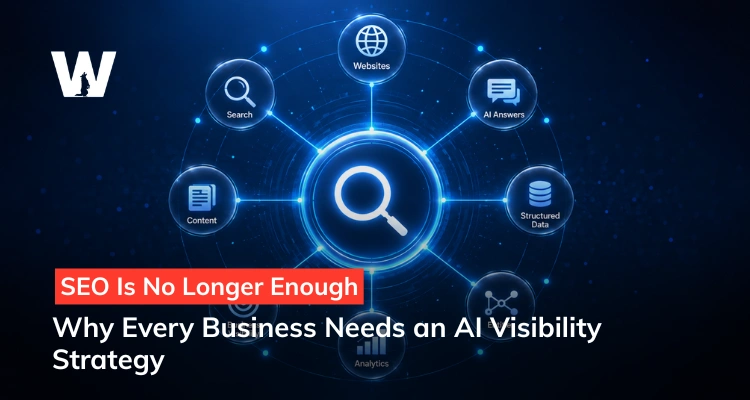
This is the new reality of Generative Engine Optimization (GEO). While traditional SEO fights for a spot on a list of blue links, GEO fights to be the answer.
At Wolfable, we have spent years mastering the art of digital visibility for complex industries. As a digital marketing partner for forward-thinking brand, we are now helping aesthetic clinics navigate this massive shift from "Search" to "Answer."
In this comprehensive guide, we will walk you through exactly how to optimize your aesthetic practice for the AI era, ensuring that when patients ask the big questions, your clinic is the trusted answer.
Generative Engine Optimization (GEO) is the process of optimizing your online content so that Generative AI engines (like ChatGPT, Google’s AI Overviews, Claude, and Bing Copilot) can understand, verify, and—most importantly—cite your brand in their responses.
For the last 20 years, aesthetic clinics have focused on SEO (Search Engine Optimization). The goal of SEO was to convince Google’s algorithm to rank your website link on the first page.
GEO is different. AI doesn't just "index" link; it "reads" content. It acts like a human researcher. It scans thousands of pages—your site, Yelp, medical journals, news articles, Reddit—and synthesizes a conclusion.
Google’s new AI Overviews (formerly SGE) often push organic website links way down the page. If a patient asks, "What is the downtime for Morpheus?" Google now answers that question directly at the top. The patient never clicks on your blog.
If you rely solely on traditional SEO, your traffic could drop by 30-50% as AI solutions satisfy user intent instantly. GEO is how you survive this shift. By optimizing GEO, you ensure that even if the patient doesn't click, your clinic is mentioned as the expert source of that information.
To win with GEO, you must understand the new patient journey. The "AI-First" patient doesn't use keywords like "Botox [City]." They use detailed, conversational prompts.
If your digital presence doesn't answer these complex, multi-layered questions, the AI will recommend a competitor who does.
AI models crave structure. They are like impatient readers who want the answer immediately. To get cited, your content must be formatted so clearly that a machine cannot misunderstand it.
An "Atomic Answer Block" is a concise, 40–60 word paragraph that directly answers a specific question. It should be placed at the very top of your service pages or blog posts.
Example for a "Lip Filler" Page:
Question (H2): How much do lip fillers cost in [City]?
Answer Block: The cost of lip fillers in [City] typically ranges from $650 to $850 per syringe. The price varies based on the type of filler used (e.g., Juvéderm, Restylane) and the injector's expertise. At [Clinic Name], our treatments start at $700, performed exclusively by board-certified dermatologists.
Why this works: The AI sees the question and the direct, data-backed answer. It is highly likely to scrape this exact sentence when a user asks about the price.
Don't bury the lead. In the AI era, storytelling comes after facts.
Do you need help restructuring your content?
At Wolfable, our Content Marketing team specializes in rewriting medical content to be "machine-readable" while remaining engaging for humans.
In the eyes of AI, the Aesthetic industry is a YMYL (Your Money, Your Life) category. This means that AI models are programmed to be extremely cautious. They will only cite sources that demonstrate immense Trust and Authority.
You must build a "Medical Graph" around your brand. This proves to the AI that you are a legitimate medical entity, not a random beauty blog.
AI reads your "About" page to verify credentials. It needs to find:
Every blog post on your site must be authored or medically reviewed by a named doctor.
Schema is a code that helps machines understand what your content is. For aesthetic clinics, standard business schema is not enough. You need a specific Medical Schema.
Wolfable Tech Tip:
We implement the following JSON-LD schemas for our healthcare clients:
Here is the biggest secret of GEO: AI trusts what others say about you more than what you say about yourself.
If a user asks Perplexity, "Who is the best injector?", the AI scans trusted third-party sites like Real Self, Healthline, local news outlets, and top beauty blogs. If you are mentioned there, you get recommended.
Is your brand invisible to AI?
If trusted sites aren't talking about you, AI won't talk about you. Wolfable’s Branding Strategy includes digital PR to build the authoritative footprint your clinic needs.
Understanding the difference is key to allocating your marketing budget for 2026.
| Feature | Traditional SEO | GEO (Generative Engine Optimization) |
|---|---|---|
| Goal | Rank #1 on Google Page 1 | Be the cited answer in ChatGPT / Gemini |
| Primary Metric | Organic Clicks / Traffic | Share of Voice / Brand Mentions |
| User Intent | “Find a list of options” | “Give me the best solution” |
| Content Focus | Keywords (e.g., “Botox London”) | Context & Data (e.g., Pricing, Safety, Comparisons) |
| Tech Focus | Meta Tags, Site Speed | Schema Markup, Entity Relationships |
| Authority Source | Backlinks (Links to your site) | Citations (Mentions of your brand) |
Aesthetic medicine is hyper-local. Patients want to know who is best near them. AI handles local queries differently than Google Maps.
The "Near Me" Prompt:
"I'm in [Neighborhood]. Which clinic has the best ratings for hydrafacials and is open on Saturdays?"
How to Win:
1. Data Consistency: Your Name, Address, and Phone (NAP) must be identical across the web. If your hours differ on Facebook vs. your Website, the AI gets "confused" and won't recommend you.
2. Sentiment Analysis in Reviews: AI reads the text of your reviews, not just the stars.
Aesthetic clinics historically hide pricing. "Call for a consultation" is the standard.
AI hates this.
AI models are designed to be helpful. If Clinic A hides pricing and Clinic B lists a range ("$300 - $500"), the AI will recommend Clinic B because it provides a "better" answer to the user's question about cost.
The Wolfable Recommendation:
You don't have to list exact prices, but you must provide ranges.
This single page often becomes the most "cited" page on a medical website because it feeds the AI the data it wants most.
As of late 2024, search is "Multi-Modal." This means users can search with Images and Video.
Your Action Plan:
Need high-quality video content?
Wolfable’s Video Marketing services can turn your expertise into the visual answers AI is looking for.
The era of typing keywords into a search bar is fading. The era of having a conversation with a digital assistant is here.
For aesthetic clinics, this is good news. AI favors quality, expertise, and facts—things reputable clinics have in abundance. By shifting your strategy from "chasing clicks" to "providing answers," you position your practice as the undeniable authority in your region.
GEO isn't about gaming the system; it's about organizing your medical expertise so clearly that the world's smartest computers can't help but recommend you.
Ready to future-proof your clinic?
Your patients are already asking AI about you. Let’s make sure they get the right answer.