Social Media
Wraps up in 6 Minutes
Is YouTube Social Media? 2026 Guide for Brands and Creators

Published On July 22, 2024
Wraps up in 6 Minutes
Published On July 22, 2024
Have you ever wondered if the platform where you watch your favorite cat videos, music performances, and DIY tutorials is actually a social media site?
With over 2 billion monthly active users, YouTube has become an integral part of our digital lives.
But is it just a video-sharing platform, or does it qualify as social media?
In this post, we have everything you need to know about YouTube, and how to this social media platform’s features to grow your business or personal brand.
Yes, YouTube is social media because it allows users to create, publish, share, react to, and discuss content with other users. Its format is video-first, but the platform includes the core social media mechanics: user profiles, subscribers, comments, likes, shares, feeds, livestream chats, creator communities, and monetized audience relationships.
The most important nuance is that YouTube is a hybrid platform. It is not the same as Facebook, Instagram, TikTok, LinkedIn, or X. It is more search-driven, more video-led, and often more educational. But it still fits the modern definition of social media because people use it to publish media and interact socially around that media.
That is also why some users say, “I do not use social media,” but still watch YouTube every day. They may not use it to post personal life updates, but they still participate in a social content ecosystem through subscriptions, comments, recommendations, playlists, shares, and creator-led communities.
For marketers, the practical answer is clear: treat YouTube as a social media platform with stronger search behavior than most social platforms. That means your content should be discoverable, helpful, consistent, interactive, and optimized for both YouTube search and audience engagement.
A platform is generally considered social media when users can create content, publish it to an audience, interact with other users, build identity through profiles, and participate in communities. YouTube meets these criteria through channels, videos, Shorts, subscriptions, comments, Community Posts, live chat, sharing tools, and creator-audience relationships.
A simple way to understand social media is to look for five features: content creation, public profiles, user interaction, community formation, and distribution through feeds or recommendations. YouTube has all five, even if users experience them differently than they do on Instagram or TikTok.
| Social Media Feature | How It Works on YouTube | Why It Matters |
|---|---|---|
| User Profiles | Creators publish through channels with names, handles, descriptions, links, playlists, and branding. | A channel acts like a public identity and content hub. |
| User-Generated Content | Creators, brands, educators, and individuals upload videos, Shorts, livestreams, and posts. | The platform depends heavily on user-published media. |
| Engagement | Viewers can like, comment, share, subscribe, save, and participate in live chat. | Audience actions create social feedback and community signals. |
| Community Building | Subscribers, memberships, Community Posts, polls, and comments help creators build recurring audiences. | Creators can turn viewers into communities, not only one-time viewers. |
| Algorithmic Distribution | Home feed, subscriptions, Shorts, suggested videos, and search help content reach users. | Content spreads through discovery systems like other social platforms. |
| Advertising Tools | Brands can run targeted video campaigns through YouTube Ads and Google Ads. | YouTube functions as a major paid social and video advertising channel. |
Bottom Line: YouTube may look like a video site at first glance, but its creator, audience, engagement, and distribution systems make it a social media platform.
YouTube is considered social media because it is built around public content, audience interaction, creator identity, and community participation. A viewer can discover a creator, subscribe, comment, share a video, join a live chat, respond to a poll, and return for future uploads. That is social behavior around media.
The strongest reasons are simple:
The reason the debate continues is that YouTube feels less friend-based than Facebook and less lifestyle-based than Instagram. People usually follow topics, creators, channels, and interests rather than personal friends. But social media does not require friendship as the main use case. It requires content plus interaction, and YouTube clearly has both.
YouTube is both a social media platform and a search engine. Users search for tutorials, reviews, music, product comparisons, entertainment, and educational content. At the same time, they interact with creators, subscribe to channels, leave comments, and engage with communities. That hybrid behavior is exactly what makes YouTube valuable for brands.
A person may search “best CRM for small business,” watch three comparison videos, read comments for social proof, subscribe to a software reviewer, and then visit a brand website. In that journey, YouTube acted as a search engine, social proof platform, video platform, and conversion assistant.
This is why brands should not separate YouTube strategies from YouTube SEO. Titles, thumbnails, descriptions, chapters, video structure, audience retention, and engagement all work together. Search helps people find the video. Social interaction helps them trust the creator or brand.
| Platform Role | What YouTube Does | Brand Strategy Implication |
|---|---|---|
| Social Media Platform | Builds communities through subscribers, comments, shares, posts, livestreams, and Shorts. | Create consistent content pillars and respond to audience engagement. |
| Search Engine | Helps users find videos for how-to questions, product reviews, comparisons, and education. | Use keyword research, searchable titles, chapters, descriptions, and problem-led topics. |
| Video Platform | Hosts long-form videos, Shorts, livestreams, podcasts, product demos, and educational series. | Match format to intent: Shorts for discovery, long-form for trust, livestreams for community. |
| Advertising Channel | Allows brands to run video ads, retargeting, awareness campaigns, and conversion campaigns. | Use YouTube Ads for reach, remarketing, product education, and demand generation. |
| Trust-Building Channel | Lets buyers see explanations, faces, processes, proof, testimonials, and real expertise. | Use video to reduce buyer hesitation before a lead form or sales call. |
Bottom Line: The best way to use YouTube is not to choose between search and social; it is to build a strategy that uses both.
YouTube is best classified as a video-sharing social media platform. It also overlaps with creator platforms, search engines, entertainment networks, learning platforms, podcast platforms, and paid advertising channels. Its primary content format is video, but its user behavior is social, searchable, and community driven.
Most social platforms now overlap. Instagram is a photo, video, shopping, messaging, and creator platform. TikTok is short-form entertainment, search, social discovery, and commerce. LinkedIn is a professional network, publishing platform, and B2B advertising channel. YouTube follows the same pattern, but with deeper video search behavior.
YouTube belongs most strongly to these categories:
YouTube started as a video-sharing website in 2005, but it gradually became more social as it added channels, subscriptions, comments, monetization, livestreams, Shorts, Community Posts, memberships, and creator tools. Each feature moved the platform from passive video hosting toward an interactive creator-audience ecosystem.
The evolution matters because the modern YouTube channel is no longer just a place to upload videos. It can function like a full media brand. A creator can publish educational videos, post polls, host livestreams, sell memberships, answer comments, share Shorts, build playlists, drive website traffic, and nurture a niche community.
For businesses, this shift is important. A brand can use YouTube to answer questions, show expertise, demonstrate products, explain services, address objections, publish case studies, and build ongoing relationships with subscribers. That is much more powerful than using video as a one-time campaign asset.
YouTube differs from TikTok, Instagram, Facebook, and Netflix because it combines long-form video, short-form video, search intent, community engagement, creator monetization, and Google-connected advertising. TikTok is stronger for rapid social discovery, Instagram for visual identity and community touchpoints, Facebook for broad networking, and Netflix for premium entertainment consumption.
| Platform | Primary Behavior | Social Features | Best Brand Use |
|---|---|---|---|
| YouTube | Search, video learning, entertainment, reviews, Shorts, livestreams, and creator following. | Channels, subscribers, comments, likes, shares, playlists, Community Posts, live chat, memberships. | Education, product explanation, thought leadership, long-term discovery, YouTube SEO, video ads. |
| TikTok | Fast short-form discovery, trends, entertainment, creator-led attention. | Following, comments, shares, duets, stitches, livestreams, algorithmic feed. | Awareness, cultural relevance, quick creative testing, creator partnerships. |
| Visual identity, Reels, Stories, DMs, lifestyle content, social proof. | Followers, comments, likes, shares, DMs, Stories, Reels, Broadcast Channels. | Brand presence, aesthetics, community touchpoints, social proof, influencer content. | |
| Networking, groups, local communities, events, broad audience reach. | Profiles, pages, groups, comments, shares, Messenger, events. | Local marketing, community groups, retargeting, older audience reach. | |
| Netflix | Subscription entertainment and premium video consumption. | Limited social interaction compared with creator platforms. | Not a social media platform; useful comparison for understanding why YouTube is more interactive. |
Bottom Line: YouTube sits between social media, search, and entertainment, which is why brands should treat it as a long-term content asset, not just another posting channel.
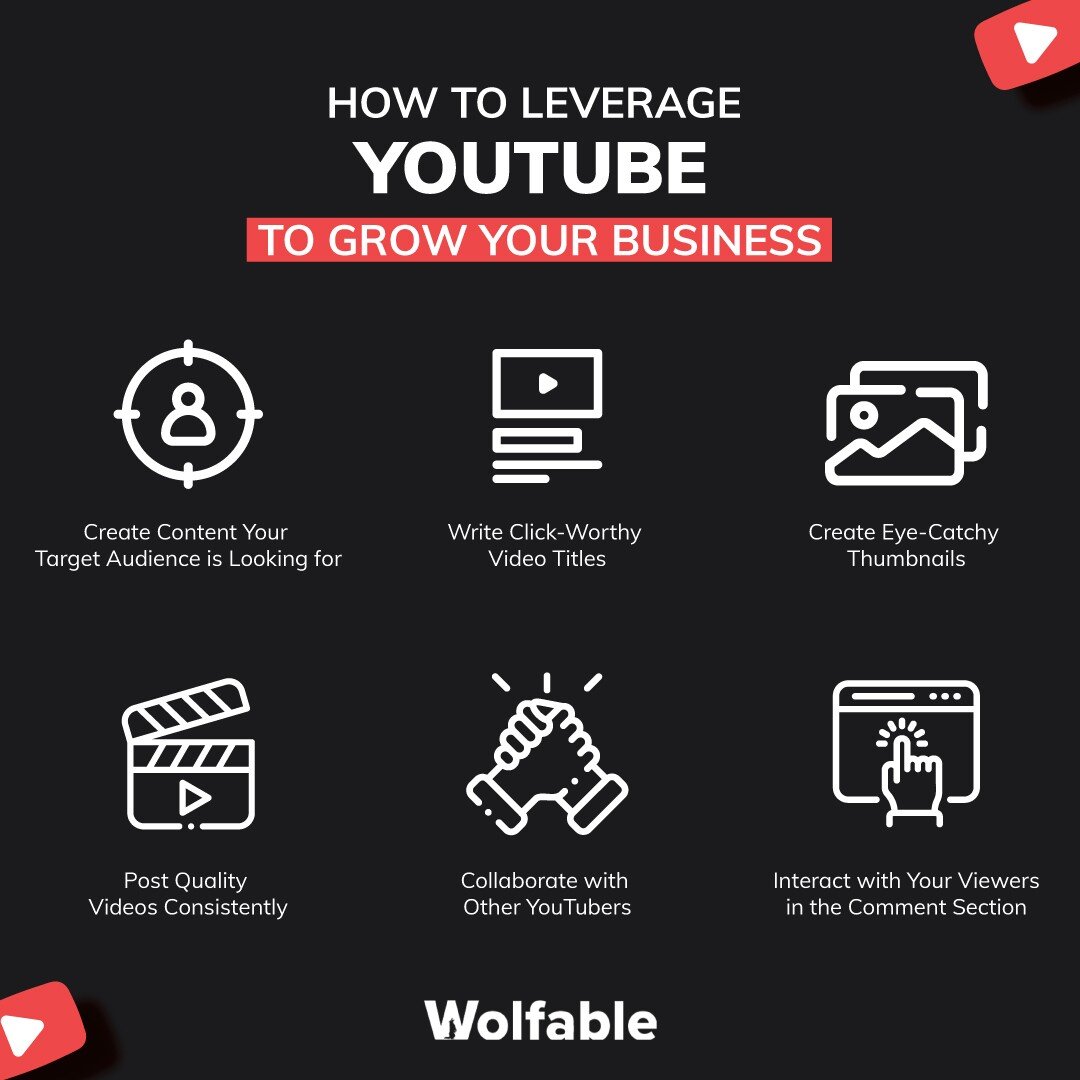
Businesses can use YouTube as social media by creating helpful videos, optimizing them for search, building a consistent channel identity, engaging with comments, using Shorts for discovery, publishing Community Posts, promoting videos with ads, and guiding viewers toward website visits, inquiries, demos, bookings, or sales conversations.
A strong YouTube strategy should work like a system, not a random collection of uploads. Use these steps:
For example, a healthcare clinic can use YouTube to explain treatment options, show practitioner expertise, and answer patient concerns. A manufacturer can use product demonstrations and process videos to reach global buyers. A service company can use educational videos to move prospects from research to trust. That is where video marketing becomes a business growth asset.
The best YouTube content for brands answers real audience questions, proves expertise, and gives viewers a reason to take the next step. Educational videos, product demonstrations, tutorials, reviews, case studies, comparisons, founder explainers, expert interviews, and customer stories usually perform better than purely promotional videos.
The format depends on the buyer journey:
| Buyer Stage | Viewer Question | Best YouTube Content |
|---|---|---|
| Awareness | What is this problem, trend, product, or solution? | Explainers, beginner guides, myth-busting Shorts, industry insights, educational playlists. |
| Consideration | Which option is right for me? | Comparison videos, tutorials, pros and cons, product or service walkthroughs, FAQs. |
| Decision | Can I trust this business? | Case studies, testimonials, process videos, expert interviews, pricing explainers, consultation CTAs. |
| Retention | How do I get more value? | How-to videos, onboarding tutorials, support content, advanced tips, live Q&A sessions. |
Bottom Line: YouTube works best when every video has a clear audience question, clear value, and clear next step.
Optimize a YouTube channel for both social and search by treating the channel like a branded content hub. The channel should explain who it helps, organize videos into playlists, use consistent thumbnails, publish searchable titles, encourage engagement, and guide viewers toward the next useful video or website action.
Use this practical checklist:
Wolfable has also created a YouTube channel optimization checklist for businesses and agencies that want a structured starting point for channel improvement.
Brands should track YouTube metrics that connect attention to business value. Views matter, but they do not tell the full story. Watch time, audience retention, click-through rate, subscribers, comments, shares, website clicks, assisted conversions, and lead quality show whether the channel is actually building trust and demand.
| Metric | What It Shows | How To Use It |
|---|---|---|
| Impressions | How often thumbnails are shown to potential viewers. | Use it to judge reach and topic visibility. |
| CTR | How well titles and thumbnails earn clicks. | Test clearer titles and stronger thumbnail concepts. |
| Average View Duration | How long viewers stay with the video. | Improve hooks, pacing, structure, and editing. |
| Audience Retention | Where viewers drop off or stay engaged. | Fix weak intros, slow sections, and unclear transitions. |
| Comments And Shares | Whether viewers are interacting socially. | Use questions, pinned comments, and community prompts. |
| Subscribers Gained | Whether content builds a repeat audience. | Double down on topics that bring loyal viewers. |
| Website Clicks | Whether videos move users toward business action. | Use clear links, CTAs, landing pages, and tracking parameters. |
| Leads And Sales Influence | Whether YouTube supports pipeline or bookings. | Connect analytics, forms, CRM notes, and sales feedback. |
Bottom Line: A brand should not judge YouTube only by views; the better question is whether viewers move from watching to trusting, returning, clicking, and converting.
The biggest mistake brands make is treating YouTube like a dumping ground for videos instead of a strategic social and search channel. YouTube needs planning, optimization, consistency, audience interaction, and measurement. Without that, even good videos can stay invisible or fail to support business goals.
YouTube matters for business growth because buyers increasingly want to see, hear, and compare before they inquire. A well-built YouTube presence can explain complex services, build credibility, increase search visibility, support paid campaigns, retarget interested audiences, and make a brand feel more trustworthy before a sales conversation starts.
This is especially important in industries were trust and education drive conversion. The Pew Research Center reports that YouTube remains one of the most widely used online platforms among U.S. adults, and DataReportal shows YouTube has massive advertising reach in India as well. For global and India-focused brands, that makes YouTube difficult to ignore.
At Wolfable, we have seen YouTube work especially well when it is connected with SEO, content strategy, video production, social media, and conversion planning. In one healthcare YouTube optimization project, stronger titles, descriptions, thumbnails, playlists, and publishing discipline helped increase views, watch time, subscribers, and audience engagement within a few months.
That is the key: YouTube should not sit separately from your marketing system. It should support your content marketing, search visibility, social media presence, paid campaigns, sales enablement, and brand authority.
Wolfable helps brands use YouTube as a growth channel by combining strategy, content, creative, SEO, video, paid promotion, analytics, and conversion thinking. The goal is not only to publish more videos; it is to create videos that answer the right questions, reach the right audience, and support measurable business outcomes. Our team looks at YouTube through four lenses:
Because Wolfable works across social media marketing, SEO, video marketing, content, branding, and performance marketing, we can connect YouTube with the full growth system instead of treating it as an isolated content channel.
So, is YouTube social media? Yes. YouTube qualifies as social media because it allows users to create content, follow channels, interact through comments and live chat, share videos, build communities, and participate in creator-led conversations.
But the stronger answer is that YouTube is a hybrid platform. It works like social media, search, video hosting, entertainment, education, creator economy, and advertising infrastructure at the same time. That is why it can be more powerful for brands than a platform used only for quick posts or short-lived trends.
If your business wants to use YouTube seriously, do not stop at uploading videos. Build a clear strategy, optimize every video, create content your audience searches for, engage with viewers, connect videos to your website, and measure business outcomes.